Connecting the dots to your health
Blood clots are part of the bigger picture
Most of us go about our daily lives without giving much thought to blood clots. We think about staying active, managing our health, going to work, traveling, having a baby, recovering from surgery or getting treatment for an illness.
We don’t always think about what those things might mean for our blood clot risk. But the choices we make, what’s happening in our bodies and the care we receive can all play a role.
That’s why blood clots are a health issue worth understanding, not just a blood issue.
Knowing how everyday life and different health conditions can affect your risk can help you recognize when you may need to pay closer attention and ask questions about your health.

Blood clots and your health
Thrombosis is about more than blood. Blood clots can be connected to many areas of your health, from heart and brain health to pregnancy, cancer, surgery and everyday situations that affect how your blood flows.
Understanding these connections can help you recognize when your risk may be higher and know when to talk with a healthcare professional.
Heart & cardiovascular health
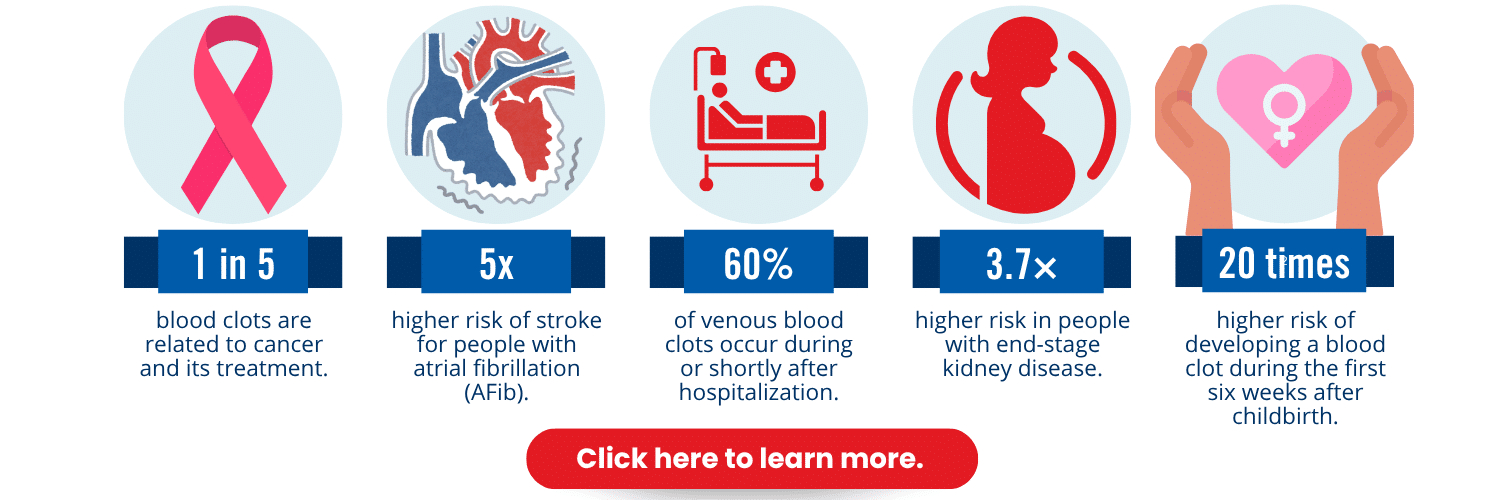
Blood clots can affect the heart and blood vessels. A clot that blocks an artery supplying the heart can cause a heart attack. Some heart conditions, including atrial fibrillation, can also increase the risk of blood clots that may travel to the brain and cause a stroke.
Seeing a cardiologist? Ask whether your heart condition or treatment affects your risk of blood clots and whether there are steps you can take to reduce that risk.
Stroke
Some strokes are caused by blood clots. An ischemic stroke happens when a clot blocks blood flow to part of the brain. Clots can form in blood vessels or travel to the brain from another part of the body.
Talking with your healthcare professional about stroke? Ask what may have caused your stroke or increased your risk and what you can do to help prevent another blood clot.
Women’s health
Blood clot risk can change throughout a woman’s life. Pregnancy and the period after giving birth increase the risk of blood clots, while some hormonal contraceptives and hormone treatments can also affect risk. See additional resources here.
Seeing your OB-GYN or women’s health provider? Ask how pregnancy, postpartum care, contraception or hormone treatment may affect your blood clot risk.
Cancer
Cancer and some cancer treatments can increase the risk of blood clots. Blood clots can occur during cancer treatment or recovery and may affect your health and care.
Seeing your oncologist? Ask whether your cancer or treatment increases your blood clot risk and what you should watch for.
Surgery & hospital care
Surgery, hospitalization and periods of limited movement can increase the risk of blood clots. When you are less active, blood may move more slowly through your veins.
Having surgery or going into the hospital? Ask your healthcare team about your blood clot risk and whether you need prevention before, during or after your hospital stay.
Travel & mobility
Long periods of sitting or limited movement can slow blood flow and increase the risk of a blood clot. The risk is generally low for most travelers but may be higher if you have other risk factors.
Planning a long trip? Ask your healthcare professional whether you have additional blood clot risk factors and what precautions you should take.
Other health conditions
Conditions such as obesity, diabetes, inflammatory diseases and kidney disease may be associated with an increased risk of blood clots.
Managing a health condition? Ask your healthcare professional whether your condition or medications affect your blood clot risk.
Children & young people
Blood clots are less common in children and young people than in adults, but they can happen. Certain medical conditions, serious illness, surgery, hospitalization and some treatments can increase risk.
Caring for a child with a medical condition? Ask your child’s healthcare team whether their condition or treatment affects their blood clot risk.
Aging
The risk of blood clots can increase as we age. Other health conditions, medications and periods of limited mobility may also affect an individual’s risk.
Talking with your healthcare professional about your health as you age? Ask whether your medications, health conditions or mobility affect your blood clot risk.
Bleeding & clotting disorders
Our bodies need a careful balance between bleeding and clotting. Some inherited or acquired conditions can affect this balance and may increase the risk of bleeding or blood clots.
Managing a bleeding or clotting disorder? Ask your hematologist or healthcare professional how your condition and treatment may affect your risk of blood clots.


Knowing the signs and symptoms of thrombosis could save your life.
Recognizing blood clot warning signs, such as leg pain, leg swelling, warmth in the limb, chest pain, shortness of breath or coughing up blood, can mean the difference between timely medical intervention and a life-threatening blood clot emergency.
Blood clot symptom awareness empowers individuals to seek prompt medical attention when experiencing these DVT and PE symptoms, potentially preventing severe thrombosis complications and saving lives. Knowing the most common blood clot signs and symptoms is crucial for early detection and treatment success.
For detailed information about specific DVT symptoms, PE warning signs and when to seek immediate medical care, visit our comprehensive guide to blood clot signs and symptoms to learn how to identify potentially life-threatening blood clot symptoms.


Could you be at risk for a blood clot?
Thrombosis can happen to anyone, but certain factors can increase your risk of developing a blood clot. These include age, surgery or hospitalization, being less active or immobile for long periods, pregnancy and the postpartum period, some medical conditions, certain medications and a previous history of blood clots. Knowing your risk factors can help you take steps to prevent blood clots and know when to talk with a healthcare professional. Learn more here.
Blood clot recovery
Post-thrombotic syndrome (PTS) is a common blood clot complication that affects many DVT survivors and can become a disabling long-term condition requiring ongoing management. Blood clot recovery often involves managing both physical PTS symptoms and psychological challenges that impact quality of life for thrombosis survivors. For comprehensive information about post-thrombotic syndrome treatment, mental health support and living well during blood clot recovery, visit our blood clot recovery page.




Get inspired
Feel inspired to organize your own World Thrombosis Day event and make a difference in your community. Hosting an event lets you spread awareness, teach others about preventing and treating blood clots, and bring people together to tackle this serious health issue. Start planning now and join the global effort to change lives this World Thrombosis Day.
