Our Story
From Awareness to Action: The World Thrombosis Day Story
The International Society on Thrombosis and Haemostasis (ISTH) established World Thrombosis Day (WTD) to draw attention to a global health threat that is often overlooked: thrombosis, or blood clots. Despite being a leading cause of death and disability, public awareness remains low.
Every year 1 in 4 people worldwide die from conditions related to thrombosis. Blood clots are the underlying cause of the top three cardiovascular killers: heart attack, stroke and venous thromboembolism (VTE). Yet most people do not know the signs, symptoms or risk factors. Even within health systems, gaps in prevention, diagnosis and treatment remain.
WTD is more than one day. It is a year-round movement to raise awareness, empower individuals to talk with their health care providers, encourage institutions to take action and advocate for stronger systems of care.
Everyone has a role to play. The campaign offers free translated campaign resources so hospitals, institutions and organizations of any size can take part easily and amplify lifesaving messages in their communities.
Read more about our impact, here.
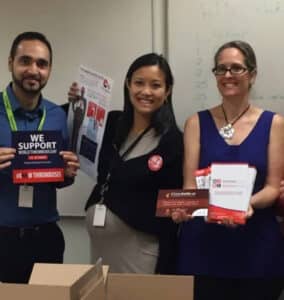
World Thrombosis Day takes place every year on October 13, the birthday of Rudolf Virchow who was a pioneer in the pathophysiology of thrombosis.
A German physician, pathologist, biologist and anthropologist, Virchow developed the concept of “thrombosis” and advanced our understanding of this condition. He pioneered the modern concept of pathological processes by his application of the cell theory to explain the effects of disease in the organs and tissues of the body. He emphasized that diseases arose, not in organs or tissues in general, but primarily in their individual cells. Moreover, he campaigned vigorously for social reforms and contributed to the development of anthropology as a modern science.
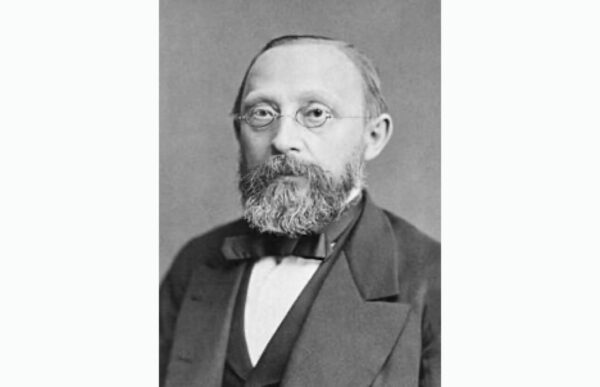
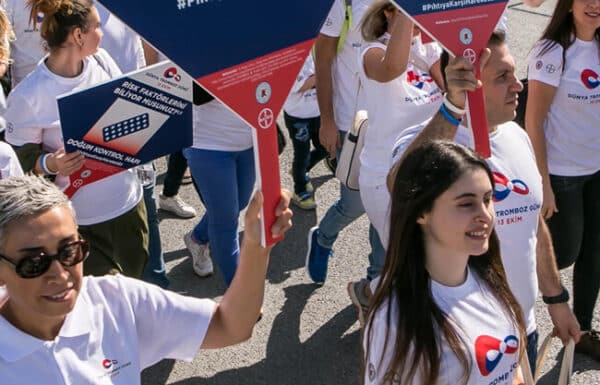
World Thrombosis Day was founded in 2014 by the International Society on Thrombosis and Haemostasis (ISTH) in response to members’ requests for a focused global awareness day on thrombosis.
Led by a global scientific steering committee chaired by Gary Raskob, Ph.D., more than 175 organizations worldwide participated in the first day, raising much-needed visibility of the condition through special events, educational forums, widespread media coverage and social media. Learn more about the ISTH at www.ISTH.org.
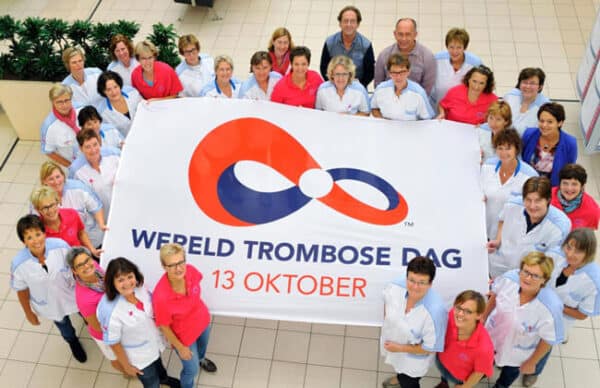
Did you know that the campaign logo was designed by a patient?
When the World Thrombosis Day campaign was founded, Pantep Angchaisuksiri, M.D., member of the campaign Steering Committee from Thailand, invited his patient to design a symbol to brand the campaign. The patient, Ekawat Suwantaroj, created a design that represented both the artery (red color) and the vein (blue color) with a clot (white circle). That design has become the well-known World Thrombosis Day symbol that is used today to represent the campaign across the globe.

Thrombosis, commonly known as blood clots, is a leading cause of death and disability worldwide. In fact, one in four people worldwide die from conditions related to blood clots—a significant driver in morbidity and mortality.
Blood clots (thrombosis) are more than just a circulatory issue—they are deeply connected to major chronic conditions such as heart disease, cancer, diabetes and obesity. Our new theme From Head to Toe, Take Control: Prevent Thrombosis, Protect Your Health highlights these critical connections, empowering individuals to take action in preventing thrombosis and improving their overall health.
Thrombosis is the leading cause of the world’s top three cardiovascular killers—heart attack, stroke and venous thromboembolism (VTE)—yet public awareness remains low. Many people do not realize that thrombosis often develops alongside other serious conditions, increasing health risks and complicating treatment.
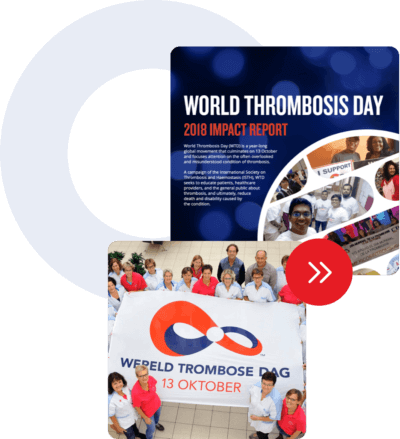
Each year, the campaign is evaluated for its reach and influence.
The World Thrombosis Day campaign brings together more than 5,000 partners across 123 countries. The campaign continues to grow each year through global events, activities, resource creation and sharing, educational opportunities, social media outreach and more. Each year, the campaign publishes its impact report in December to share highlights and outcomes.
About the World Thrombosis Day Campaign
If you have any questions, contact the WTD campaign at wtd@isth.org.
