WORLD THROMBOSIS DAY
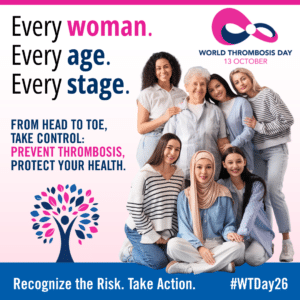
Blood clot risk evolves across a woman’s lifespan.
Discover the risks, recognize the signs
and take action at every stage of life.
and take action at every stage of life.
Every Oct. 13, people around the world come together on World Thrombosis Day to raise awareness, recognize the signs and help prevent thrombosis.
In 2026, we’re putting women’s health in focus. Thrombosis is a blood clot that forms in a vein or artery and can block blood flow. A woman’s risk of developing a clot changes from adolescence and reproductive health through pregnancy, postpartum, menopause and beyond.
Learn about your risk. Know the signs. Take control of your health.
Pam Vyhonsky blood clot story presented by Stryker
Pam is an ER nurse and a member of her hospital’s pulmonary embolism response team (PERT), a group of specialists who work together to diagnose and treat people with pulmonary embolism quickly. She has helped care for patients with blood clots, and then she became one herself. For about two weeks, she had dizziness that came and went, and she assumed a change in medication was the cause. She was rushed to the hospital after passing out, where her care team used Stryler technology to remove the clot. Watch Pam’s pulmonary embolism story.

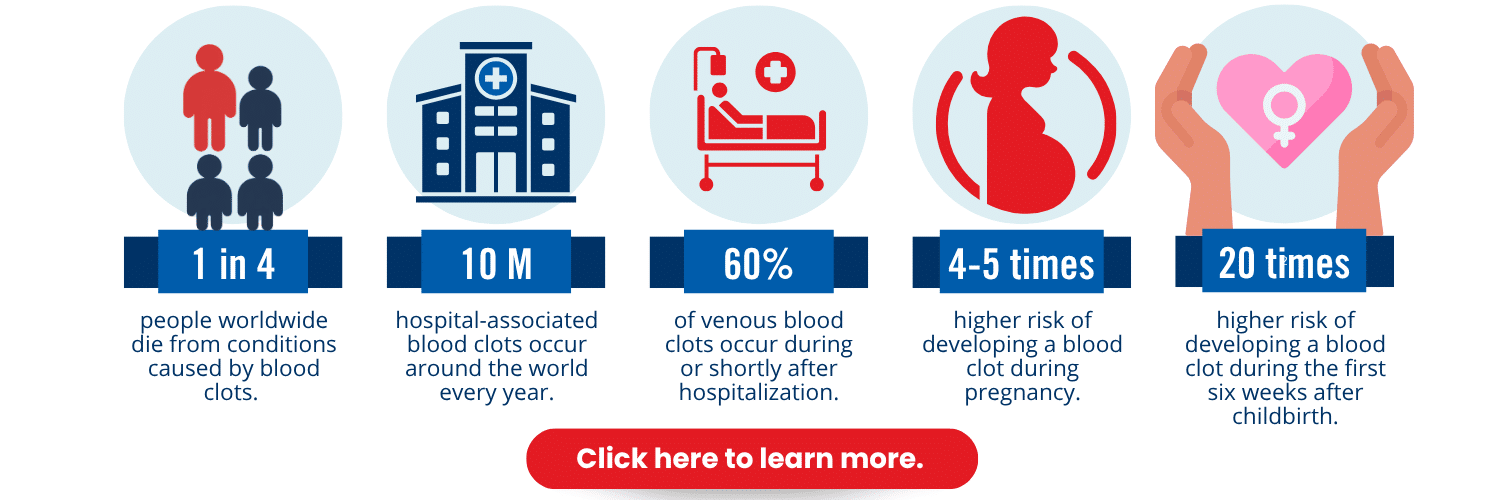
Know the numbers. Know the risk.
The more we know about blood clots, the more we can do to prevent them and save lives.
There’s a place for everyone
Whether you’re here to learn, share, support or take action, find the path that’s right for you.
Know what to look for as a patient
Anyone can develop a blood clot. Your risk may be higher during certain times in your life or because of things like surgery, pregnancy, being less active, some illnesses or certain medications.
Knowing your risk and recognizing the warning signs can help you get care when you need it.
World Thrombosis Day campaign resources help you understand blood clots, spot the warning signs and take steps to protect your health.
Support better conversations about blood clots
Healthcare professionals play a key role in preventing, recognizing and treating blood clots. Venous thromboembolism (VTE), including deep vein thrombosis (DVT) and pulmonary embolism (PE), can affect patients across every medical specialty.
Risk can increase with surgery, prolonged immobility, cancer, pregnancy and certain medications. Recognizing risk early and taking appropriate steps to prevent and detect blood clots can help protect patients and improve outcomes.
Use these World Thrombosis Day resources to raise awareness, prevent thrombosis and recognize blood clots early.
Know the risks. Recognize the signs. Take action.