World Thrombosis Day 2026 campaign calls for greater awareness of women’s blood clot risks
This year’s campaign highlights how risk can change across a woman’s life and encourages women to understand their personal risk and take action.
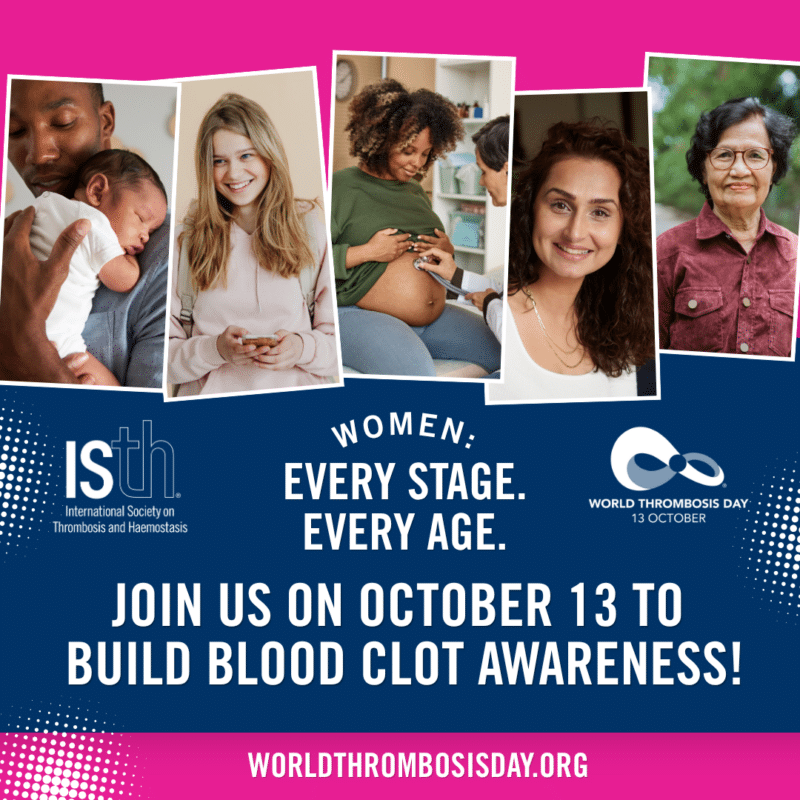
Charlotte, N.C., United States, September 10, 2026 — The International Society on Thrombosis and Haemostasis (ISTH) is launching its 2026 World Thrombosis Day campaign to raise awareness of how blood clot risk can change throughout a woman’s life. The campaign calls attention to the unique risks women face across different life stages and encourages women to understand their risk and take action.
Recognized annually on October 13, World Thrombosis Day is a global movement led by ISTH that brings together thousands of partners across 123 countries to raise awareness of blood clot risk factors, signs, symptoms and the importance of prevention. As an area of focus for the Society, this year’s campaign recognizes that while blood clots can affect both men and women, women face unique risks associated with hormonal changes, pregnancy, postpartum care and menopause.
According to the U.S. Centers for Disease Control and Prevention (CDC), pregnancy increases the risk of blood clots approximately four- to five-fold, while the risk is particularly elevated during the first six weeks after childbirth. A woman’s personal history of blood clots, inherited clotting conditions and other health factors can also affect her individual risk.
“Women’s health and blood clot risks are closely connected, but the relationship is often overlooked,” said James Douketis, M.D., Chair of the ISTH World Thrombosis Day campaign. “By bringing greater attention to blood clot risk across an individual’s lifespan, we can help women and their healthcare professionals recognize important risk factors, understand when risk may be higher and take action to prevent serious complications. Awareness is an important first step towards preventing thrombosis and saving lives.”
Symptoms of deep vein thrombosis (DVT) may include swelling, pain or tenderness, warmth and/or redness in an affected limb. Symptoms of a pulmonary embolism (PE) may include sudden shortness of breath, chest pain, rapid heartbeat and/or coughing. Anyone experiencing symptoms that could indicate a serious blood clot should seek immediate medical attention.
The World Thrombosis Day campaign calls on individuals, healthcare professionals, hospitals, organizations and communities around the world to help educate women and their healthcare professionals about these critical risk factors, signs and symptoms. Healthcare professionals and ISTH members can play an important role by bringing these conversations into clinical practice, education and their communities.
To learn more about the World Thrombosis Day campaign and get involved, visit www.worldthrombosisday.org. To learn more about women’s unique health risks, including tailored resources and sharable information, visit www.worldthrombosisday.org/women-blood-clots/.
Follow the latest updates and get involved on social media using the hashtag #WTDay26.
About the ISTH
Founded in 1969, the International Society on Thrombosis and Haemostasis (ISTH) is the leading global medical and scientific organization dedicated to advancing the understanding, prevention, diagnosis and treatment of conditions related to thrombosis and hemostasis. The ISTH convenes and supports a global community of more than 21,000 clinicians, researchers, educators and healthcare professionals across more than 120 countries to advance science, improve patient care and drive progress in thrombosis and bleeding disorders worldwide. Through its scientific leadership, education, peer-reviewed publications, clinical guidance, expert committees, global partnerships, advocacy initiatives, meetings and congresses, and World Thrombosis Day, the ISTH serves as a trusted international voice for the field. Learn more at www.isth.org.
MEDIA CONTACT:
Barbara Krolak
ISTH Marketing Manager
media@isth.org
Share this post, choose a platform
Related Campaign News
Global campaign brings together partners to raise awareness of women’s unique [...]

Travelers often hear about blood clots and long flights but rarely [...]

A new paper published in Nature Reviews Cardiology provides a [...]